
Introduction
Modern lifestyles often involve long working hours, constant screen time, physical inactivity, stress, and poor posture. Over time, these factors can contribute to muscle tension, fatigue, discomfort, and reduced overall well-being.
While proper nutrition, exercise, and quality sleep remain the foundation of good health, regular full-body massage therapy has become an increasingly popular complementary wellness practice that supports both physical and mental health.
More than just a relaxing spa experience, massage therapy may help improve blood circulation, reduce muscle tightness, support recovery, promote better sleep, and encourage relaxation. Whether you’re an office worker experiencing neck and back discomfort, an athlete recovering from training, or someone looking to manage stress, regular massage therapy can offer meaningful benefits.
In this guide, we’ll explore the top 10 health benefits of regular full-body massage therapy, what research says, and answer common questions people ask before booking a massage.
What Is Regular Full-Body Massage Therapy?
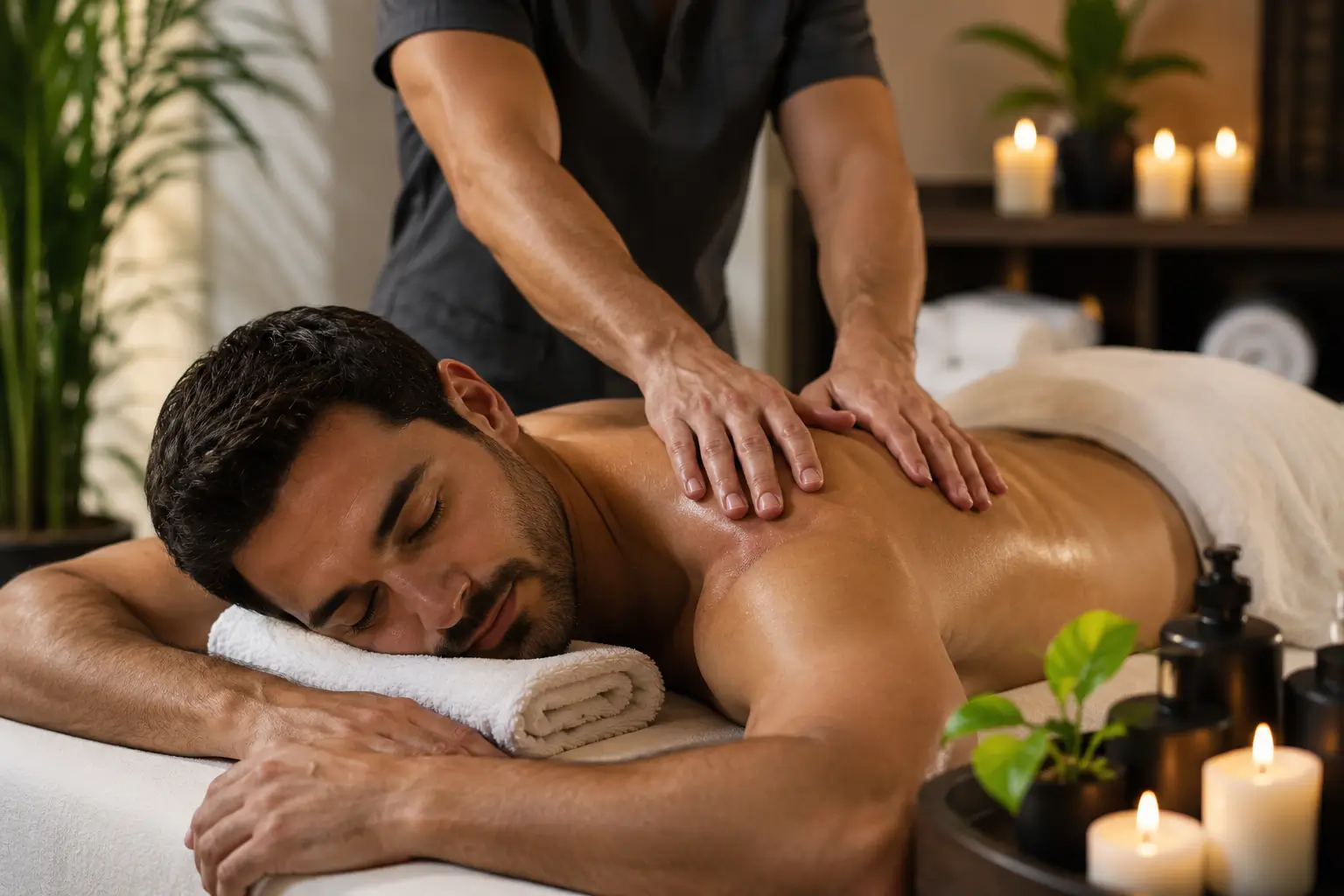
Full-body massage therapy involves the manipulation of muscles, connective tissues, tendons, and ligaments using various techniques designed to promote relaxation and improve physical function.
A typical session focuses on:
- Neck and shoulders
- Back and spine
- Arms and hands
- Legs and feet
- Head and scalp
Massage therapists may use techniques such as:
- Long gliding strokes
- Kneading
- Circular pressure
- Stretching movements
- Deep tissue work
- Trigger point therapy
The goal is to relieve tension, improve circulation, reduce stress, and enhance overall wellness.
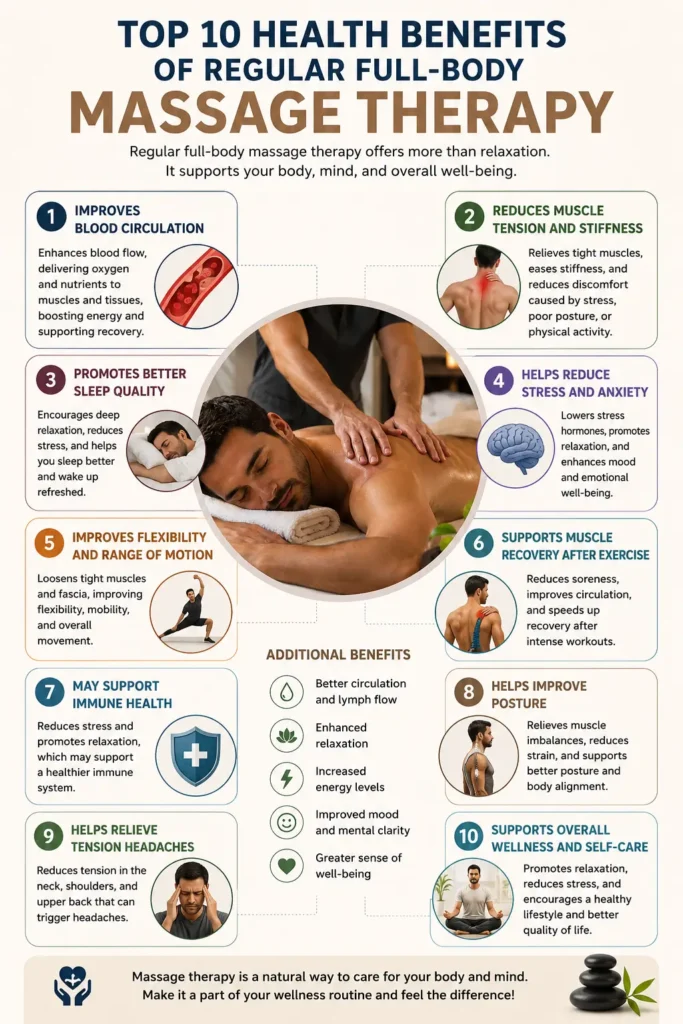
1. Improves Blood Circulation
One of the most well-known benefits of massage therapy is its ability to support healthy blood circulation.
Massage stimulates soft tissues and encourages blood flow throughout the body. Improved circulation helps deliver oxygen and nutrients to muscles and tissues more efficiently while supporting the body’s natural recovery processes.
Benefits of Better Circulation
- Improved oxygen delivery
- Enhanced tissue health
- Reduced fatigue
- Faster muscle recovery
- Increased energy levels
For individuals who spend long hours sitting or working at a desk, improved circulation can be especially beneficial.
2. Reduces Muscle Tension and Stiffness
Daily stress, repetitive movements, poor posture, and physical activity often cause muscles to become tight and uncomfortable.
Massage therapy helps loosen muscles, reduce stiffness, and promote relaxation.
Common Areas of Relief when doing a full body massage
- Neck tension
- Shoulder tightness
- Lower back discomfort
- Leg fatigue
- Muscle soreness
Regular massage sessions may help improve comfort and mobility while reducing everyday physical stress.
3. Promotes Better Sleep Quality
Sleep is essential for recovery, mental clarity, and overall health.
Stress, anxiety, and physical discomfort can make it difficult to fall asleep or stay asleep. Massage therapy promotes relaxation, helping many people achieve more restful sleep.
Potential Sleep Benefits
- Easier relaxation before bedtime
- Improved sleep quality
- Reduced nighttime discomfort
- Better physical recovery
- Enhanced overall well-being
Many individuals report feeling more rested after incorporating massage into their wellness routine.
4. Helps Reduce Stress and Anxiety
Chronic stress affects both the mind and body.
Over time, elevated stress levels may contribute to fatigue, headaches, poor concentration, sleep problems, and muscle tension.
Massage therapy encourages relaxation and helps create a sense of calm.
Mental Wellness Benefits
- Reduced stress levels
- Enhanced relaxation
- Improved mood
- Better emotional well-being
- Increased mental clarity
For many people, massage serves as an effective self-care practice that supports mental wellness.
5. Improves Flexibility and Range of Motion
Tight muscles can limit movement and reduce flexibility.
Massage therapy helps loosen soft tissues and improve mobility, making movement easier and more comfortable.
Benefits Include
- Greater flexibility
- Improved joint mobility
- Reduced stiffness
- Better athletic performance
- Easier daily movement
This benefit is particularly valuable for active individuals, athletes, and older adults.
6. Supports Muscle Recovery After Exercise
Exercise places stress on muscles, which can result in soreness and tightness.
Massage therapy is commonly used as part of athletic recovery programs to help support the body’s natural healing processes.
Recovery Benefits
- Reduced post-workout soreness
- Improved circulation
- Relaxed muscles
- Better mobility
- Enhanced recovery experience
Athletes often use massage therapy to complement training and recovery routines.
7. May Support Immune Health
Many lifestyle factors, including sleep quality, stress management, nutrition, and physical activity influence a healthy immune system.
Massage therapy supports overall wellness by helping reduce stress and promote relaxation.
Wellness Benefits
- Better stress management
- Improved sleep quality
- Enhanced recovery
- Greater sense of well-being
While massage is not a treatment for illness, maintaining lower stress levels can contribute positively to overall health.
8. Helps Improve Posture
Poor posture has become increasingly common due to desk jobs, smartphone use, and sedentary lifestyles.
Tight muscles can pull the body out of proper alignment, contributing to discomfort and movement restrictions.
Posture Benefits
- Reduced neck strain
- Improved shoulder mobility
- Less back discomfort
- Better body awareness
- Improved movement patterns
When combined with exercise and ergonomic improvements, massage therapy can support healthier posture habits.
9. Helps Relieve Tension Headaches
Many headaches are linked to tension in the neck, shoulders, and upper back.
Massage therapy helps reduce muscular tightness that may contribute to tension-related headaches.
Potential Benefits
- Relaxed neck muscles
- Reduced shoulder tension
- Improved circulation
- Reduced stress levels
Many people find that regular massage helps reduce the frequency and severity of tension headaches.
10. Supports Overall Wellness and Self-Care
Perhaps the most significant benefit of regular massage therapy is its contribution to overall well-being.
Massage encourages individuals to slow down, relax, and prioritize self-care.
Long-Term Wellness Benefits
- Improved relaxation
- Better stress management
- Enhanced recovery
- Greater body awareness
- Improved quality of life
When incorporated into a healthy lifestyle, massage therapy can become an important part of long-term wellness.
What Does Research Say About Massage Therapy?
A growing body of scientific research supports massage therapy as a complementary wellness practice.
Stress Reduction
According to the National Center for Complementary and Integrative Health (NCCIH), massage therapy may help reduce stress and promote relaxation.
Pain Management
Research suggests massage therapy may provide short-term relief for conditions such as lower back pain and neck pain.
Sleep Quality
Several studies have found that massage may contribute to improved sleep quality by promoting relaxation and reducing physical discomfort.
Exercise Recovery
A study published in Science Translational Medicine found that massage after exercise may help reduce inflammatory signaling and support muscle recovery.
Mental Well-Being
Research reviewed by the American Massage Therapy Association (AMTA) suggests massage may help reduce symptoms associated with stress and anxiety while improving overall well-being.
How Often Should You Get a Full Body Massage?
The ideal frequency depends on your lifestyle and wellness goals.
For General Wellness
Every 3–4 weeks
For Stress Management
Every 2–3 weeks
For Athletes and Active Individuals
Weekly or bi-weekly
For Chronic Muscle Tension
As recommended by a qualified massage therapist
Consistency often provides greater long-term benefits than occasional treatments.
Frequently Asked Questions About Regular Full-Body Massage Therapy
Does massage really improve blood circulation?
Yes. Massage therapy stimulates soft tissues and may temporarily increase blood flow, helping oxygen and nutrients reach muscles and tissues more efficiently.
Can massage help with back and neck pain?
Massage therapy may help relieve muscle tension and stiffness associated with poor posture, prolonged sitting, repetitive movements, and everyday physical stress.
Can massage help with insomnia or poor sleep?
While massage is not a treatment for insomnia, research suggests it may promote relaxation and reduce stress, which can contribute to improved sleep quality.
Why do I feel relaxed after a massage?
Massage helps activate the body’s relaxation response, reducing physical tension and creating a sense of calm and well-being.
Is massage good after exercise?
Yes. Many athletes use massage therapy to support recovery, reduce muscle tightness, and improve mobility after workouts.
Can massage strengthen the immune system?
Massage is not a treatment for immune conditions. However, better stress management and improved sleep quality may positively support overall wellness.
Can massage improve flexibility?
Massage helps loosen tight muscles and soft tissues, which may improve flexibility and range of motion over time.
Can massage help tension headaches?
Many tension headaches are linked to tight muscles in the neck and shoulders. Massage therapy may help reduce muscular tension that contributes to these headaches.
Is full body massage safe?
Most healthy adults can safely enjoy massage therapy. Individuals with certain medical conditions should consult a healthcare provider before scheduling a massage.
How long does a full body massage take?
Most sessions last between 60 and 120 minutes, with 90 minutes being one of the most popular options.
What should I do after a massage?
To maximize the benefits of your session:
- Drink plenty of water
- Allow your body time to relax
- Stretch gently if recommended
- Avoid strenuous exercise immediately afterward
Does massage remove toxins from the body?
Massage improves circulation and supports natural recovery processes. However, claims that massage “flushes toxins” from the body are not strongly supported by scientific evidence.
Final Thoughts
Regular full-body massage therapy offers a wide range of benefits for both physical and mental well-being. From improving blood circulation and reducing muscle tension to supporting better sleep and stress management, massage can be a valuable addition to a healthy lifestyle.
While it should never replace medical treatment, massage therapy can complement other wellness practices by helping the body recover, relax, and function more comfortably.
Whether you’re looking to ease everyday stress, improve flexibility, support athletic recovery, or simply invest in your overall health, regular full-body massage therapy can help you feel better, move better, and live better.
While massage therapy should not replace medical treatment, it may complement a healthy lifestyle by supporting relaxation and physical recovery. Information from the National Center for Complementary and Integrative Health (NCCIH) on Massage Therapy highlights its role as a popular complementary health practice.