
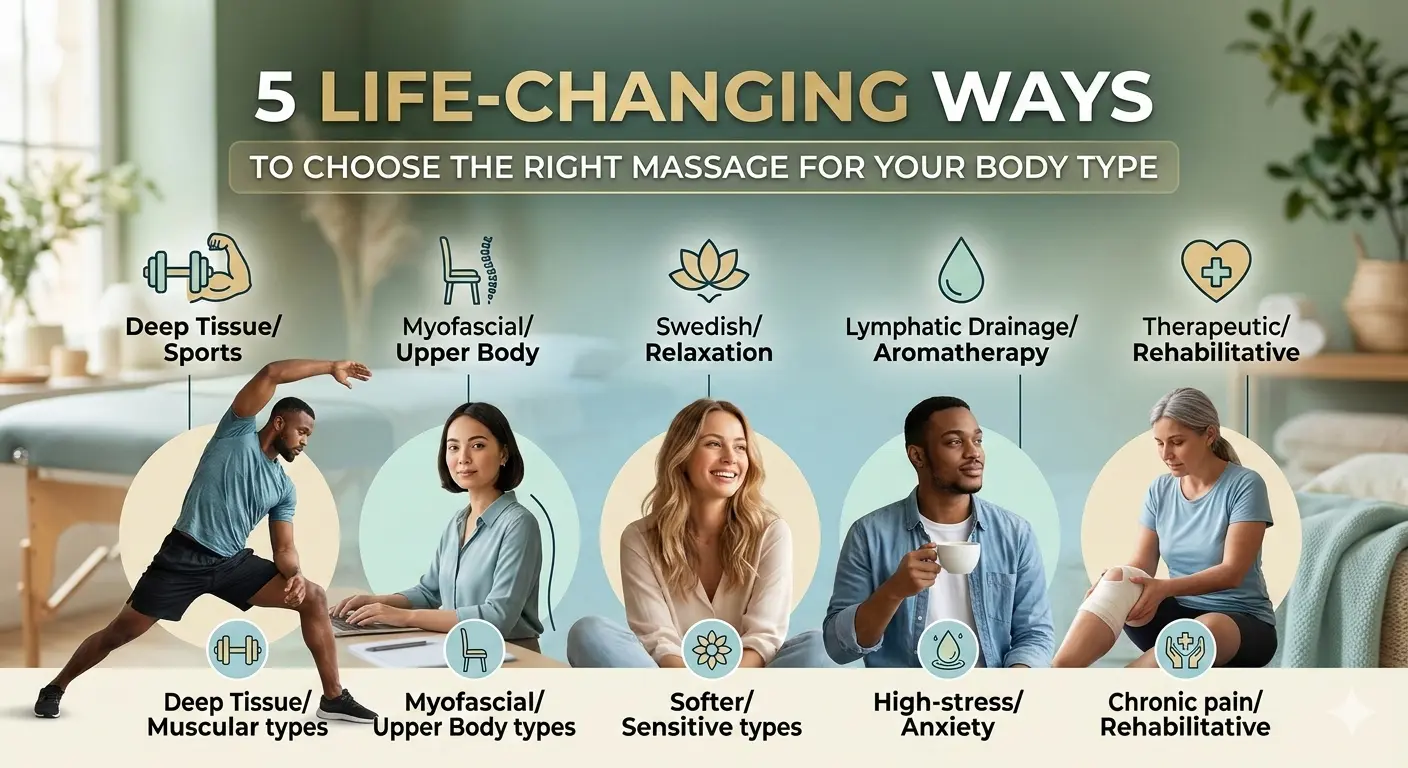
Massage therapy is not one size fits all. The right technique depends on your body composition, muscle density, stress level, and lifestyle.
Some people need deep muscle recovery. Others need nervous system support. Choosing the right massage for your body type ensures better results, less soreness, and longer lasting relief.
This guide will help you understand which massage style fits your body and goals best.
Why Body Type and Lifestyle Matter
Your body responds to pressure differently based on:
- Muscle mass
- Activity level
- Pain tolerance
- Posture and mobility
- Stress levels
A highly active athlete may need firm, targeted pressure. A person under chronic stress may need gentle, calming techniques. If you choose a massage that does not match your body’s needs, you may feel uncomfortable or overly sore afterward.
The key is alignment between technique and condition.
For Athletic and Muscular Body Types
If you exercise regularly, lift weights, run, or play sports, your muscles likely carry tension from repetitive strain.
Best Options
Deep Tissue Massage
Deep tissue massage targets deeper muscle layers and connective tissue. It uses slow, firm pressure to break up adhesions and improve circulation.
It is ideal for:
- Chronic tightness
- Muscle knots
- Limited range of motion
- Post workout recovery
Expect some intensity during the session, but you should still be able to breathe comfortably.
Sports Massage
Sports massage is designed for active individuals. It combines stretching, compression, and focused muscle work.
It works well for:
- Pre event preparation
- Post event recovery
- Injury prevention
- Performance support
If your body feels tight rather than stressed, structured muscle work will likely give you the best results.
For Sedentary or Desk Based Lifestyles
Long hours at a desk can create tight hips, rounded shoulders, and neck stiffness. Over time, posture changes lead to discomfort.
Best Options
Myofascial Release
Myofascial release focuses on the fascia, the connective tissue around muscles. Gentle sustained pressure helps release restrictions and improve mobility.
It supports:
- Postural correction
- Increased flexibility
- Reduced stiffness
Targeted Upper Body Massage
If most of your discomfort is in your neck, shoulders, and lower back, focused treatment in those areas can undo daily strain.
You may not need full body deep pressure. Precision often works better than intensity.
For Softer or More Sensitive Body Types
If your body is more sensitive to pressure or you experience fluid retention, a gentler approach may be more effective.
Best Options
Swedish Massage
Swedish massage uses long, flowing strokes with light to moderate pressure. It improves circulation and promotes full body relaxation.
It is ideal for:
- First time clients
- Stress relief
- General wellness
- Mild muscle tension
Lymphatic Drainage Massage
This technique uses very light, rhythmic movements to stimulate the lymphatic system. It supports detoxification and reduces swelling.
It can help with:
- Fluid retention
- Post surgical recovery
- General immune support
If firm pressure leaves you sore or fatigued, lighter techniques may serve you better.
For High Stress and Anxiety
Sometimes muscle tension is not the main issue. Your nervous system may be overstimulated from work, life pressure, or lack of sleep.
Best Options
Relaxation Massage
Gentle pressure combined with a slow pace helps reduce stress hormones and calm the nervous system.
Aromatherapy Massage
When essential oils are added to light massage, they can enhance relaxation and improve mood.
If you leave deep sessions feeling drained rather than refreshed, your body may need calming support instead of aggressive muscle work.
For Chronic Pain or Injury Recovery
If you are dealing with chronic pain or past injuries, your massage should be customized carefully.
Best Options
Therapeutic Massage
Therapeutic massage blends techniques based on your specific condition. Pressure is adjusted to avoid aggravating sensitive areas.
Rehabilitative Massage
This approach focuses on restoring movement patterns and supporting recovery. It may incorporate elements similar to physical therapy.
In these cases, communication with your therapist is essential. You should always inform them about injuries, surgeries, or medical conditions.
Questions to Ask Before Booking
To choose the right massage, ask yourself:
- What is my main goal? Relaxation, pain relief, or recovery?
- Do I prefer light or firm pressure?
- Am I recovering from an injury?
- Do I feel stressed or physically tight?
- Do I want full body work or focused treatment?
Your answers will guide your selection.
Signs You Chose the Right Massage
After the right massage, you should experience:
- Reduced tension
- Improved mobility
- Better sleep
- Lower stress levels
- Relief that lasts beyond one day
Mild soreness after deep work is normal. However, sharp pain or excessive fatigue may indicate the pressure was too intense.
When to Change Massage Styles
Your body evolves. What worked before may not work now.
Consider switching techniques if:
- You started a new workout routine
- Your stress levels increased
- You experienced an injury
- You feel limited improvement from your current style
Massage therapy should adapt to your body’s needs.
Final Thoughts
Choosing the right massage for your body type is about understanding how your muscles, stress levels, and lifestyle interact.
Athletic bodies often benefit from deeper work. Sedentary lifestyles need mobility support. Sensitive or high stress individuals may need gentle relaxation techniques.
Listen to your body. Communicate clearly with your therapist. And choose the massage that aligns with how you feel today.
When the technique matches your needs, your body responds with real relief, improved movement, and better overall well being.