
Gay Massage Spas vs. Traditional Spas in New York City — A Complete Comparison
New York City stands as one of the world’s most inclusive wellness destinations. From luxury retreats in Manhattan to boutique wellness studios in Brooklyn, the city offers a wide spectrum of massage experiences tailored to different lifestyles and identities.
Among these, two distinct categories often emerge in user searches: gay massage spas and traditional massage spas. While both aim to promote relaxation and well-being, they differ significantly in environment, audience focus, and service approach.
Understanding these differences helps users choose a spa experience that aligns with their expectations, comfort level, and personal identity.
Understanding the Core Purpose of Each Spa Type
At a foundational level, both spa types provide services such as Swedish massage, deep tissue therapy, and stress relief treatments. However, the intent behind the experience design sets them apart.
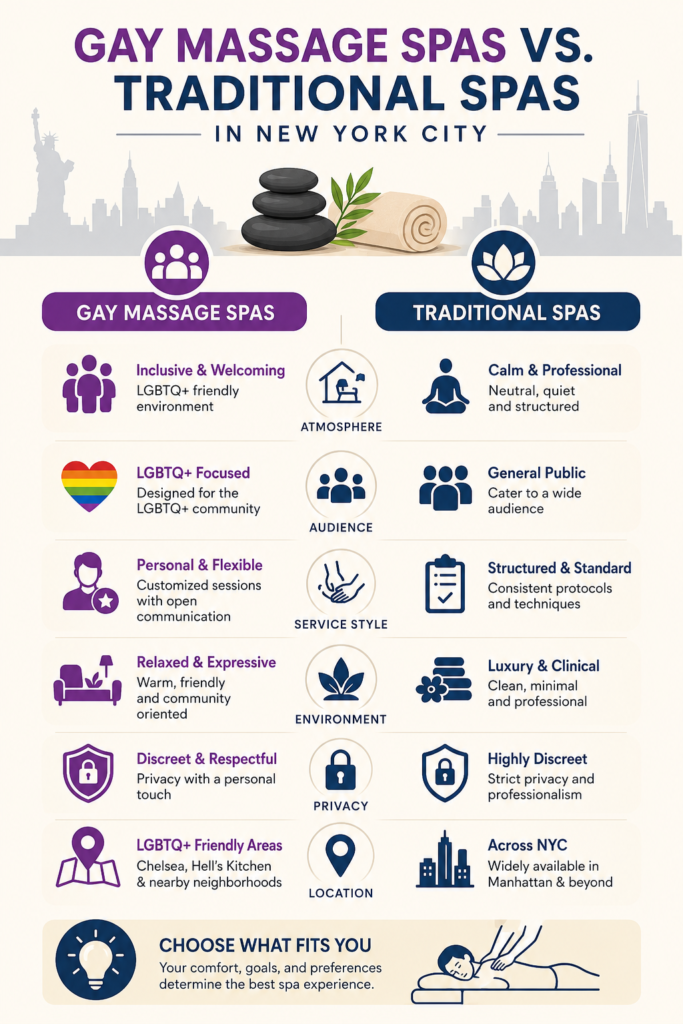
Traditional massage spas in New York City cater to a broad audience. Their services are structured, standardized, and focused on general wellness or luxury relaxation.
In contrast, gay massage spas are specifically designed for the LGBTQ+ community. These spaces emphasize inclusivity, personal comfort, and identity-aware service delivery—creating environments where clients feel fully accepted.
This shift reflects how modern wellness aligns with semantic user intent, where services are tailored not just to needs, but also to context and identity .
Atmosphere and Client Experience
The atmosphere is often the most noticeable difference between the two spa types.
Traditional Spa Environment
Traditional spas typically feature:
- Neutral, calming décor
- A quiet and structured setting
- Professional, standardized interactions
- Broad demographic appeal
These spas are common in upscale areas like Upper East Side and Midtown Manhattan, where luxury wellness services cater to professionals and tourists alike.
Gay Massage Spa Environment
Gay massage spas, often found in neighborhoods like Chelsea and Hell’s Kitchen, offer:
- A more expressive and welcoming atmosphere
- LGBTQ+ inclusive branding and staff
- A relaxed, less formal interaction style
- A sense of community and openness
These environments are designed to make clients feel safe and comfortable, which is a key factor in customer satisfaction and retention.
Service Style and Personalization
While both spa types offer similar treatments, the delivery style differs significantly.
Traditional massage spas emphasize:
- Structured sessions
- Clinical or luxury-oriented techniques
- Consistent service protocols
Gay massage spas often focus on:
- Personalized sessions tailored to individual comfort
- Open communication between client and therapist
- A more human-centered, flexible experience
This reflects a broader shift in consumer behavior—users now expect services that adapt to their preferences rather than rigid formats.
Inclusivity and Cultural Awareness
Inclusivity is one of the defining differences between these spa categories.
Gay massage spas are intentionally built as safe spaces for LGBTQ+ individuals, offering a level of cultural awareness and comfort that may not always be present in traditional settings.
While many traditional spas in New York City are becoming more inclusive, they are typically designed for general audiences rather than specific communities.
Pricing and Accessibility in NYC
Pricing across both spa types varies depending on location and service level.
- High-end traditional spas in Manhattan often charge premium rates
- Boutique and community-focused spas may offer more flexible pricing
Accessibility also differs:
- Traditional spas are widely distributed across NYC
- Gay massage spas are often concentrated in LGBTQ+ friendly neighborhoods
This geographic clustering reflects how services evolve around community demand.
Privacy and Discretion
Privacy is essential in any wellness setting.
Traditional spas maintain strict professional boundaries and a highly discreet environment.
Gay massage spas also prioritize privacy but may offer a more relaxed and personalized interaction style. For many clients, this balance enhances trust and overall comfort.
How to Choose the Right Spa for You
Choosing between a gay massage spa and a traditional spa depends on your goals and preferences.
- Choose a traditional spa if you prefer structured, clinical, or luxury experiences
- Choose a gay massage spa if you value inclusivity, personalization, and a relaxed environment
- Consider location, pricing, and atmosphere when making your decision
Modern search behavior shows users are increasingly looking for experience-based results, not just services. This is why content that clearly differentiates offerings performs better in search rankings.
The Evolution of Wellness in New York City
The growing popularity of gay massage spas reflects a broader transformation in the wellness industry.
Today, users expect services that align with their identity, preferences, and emotional comfort—not just physical needs. Search engines have evolved similarly, prioritizing semantic relevance and contextual understanding over simple keyword matching.
This shift is especially visible in diverse cities like New York, where niche services continue to grow alongside mainstream offerings.
Final Thoughts
Both gay massage spas and traditional massage spas in New York City offer valuable wellness experiences. The difference lies in environment, personalization, and inclusivity.
If your priority is structure and consistency, a traditional spa may be the right choice. If you value comfort, identity-safe spaces, and personalized service, a gay massage spa may better suit your needs.
Ultimately, the best spa experience is one where you feel relaxed, respected, and fully at ease.